Websites and business applications for Long Island and NYC
CUSTOM WEB DEVELOPMENT FOR LONG ISLAND & NYC
- Group
- The Web Group
- Service
- Custom development
- Market
- Long Island & NYC
- Focus
- Performance · Growth · SEO
01 / The Web Group
Built for
business
growth.
Build around the tasks your customers and team need to complete.
From a service website to a scoped business application, we agree on users, data, permissions, content, and integrations before selecting an implementation approach.
02 / Build around the tasks your customers and team need to complete.
Plan. Build.
Test. Grow.
- 01
Map the workflow and dependenciesDefine users, roles, data ownership, approved actions and acceptance checks. Review the existing CMS, migration needs, licensing and external API…
Define users, roles, data ownership, approved actions and acceptance checks. Review the existing CMS, migration needs, licensing and external API limits before choosing a stack.
- 02
Make architecture decisions explicitChoose static generation, server rendering or an authenticated application by content freshness and access requirements. Separate CMS content from…
Choose static generation, server rendering or an authenticated application by content freshness and access requirements. Separate CMS content from transactional data and define integration timeouts, retries and idempotent actions.
- 03
Build and verify the critical pathImplement the agreed responsive pages, CMS or application features, integrations and inquiry states. Test successful and failed submissions,…
Implement the agreed responsive pages, CMS or application features, integrations and inquiry states. Test successful and failed submissions, permission boundaries, API timeouts and duplicate events, not just the happy path.
- 04
Release and hand offDocument access, deployment, cache invalidation, rollback and routine operations. Review core workflows with the client and distinguish launch…
Document access, deployment, cache invalidation, rollback and routine operations. Review core workflows with the client and distinguish launch acceptance from ongoing hosting, support and feature work.
03 / Implementation decisions
Implementation decisions
Choose tools for the actual data, users and operating responsibilities.
- Frontend architectureReact and Next.js rendering, forms and CMS boundaries
- Backend integrationNode.js APIs, field mapping, retries and failure states
- Data and permissionsDatabase ownership, role access and migration checks
- Testing and handoffWorkflow acceptance, release checks and operating notes
04 / Decisions before scope
Architecture questions we answer
These answers belong in the scope before implementation.
- Does the page need server-side rendering?
- Does it benefit from static generation?
- Does the system need authentication?
- Who owns the data?
- What happens if an API fails?
- What actions must be idempotent?
- How should retries work?
- What happens after a failed form submission?
- What data belongs in the CMS?
- What belongs in an application database?
A practical starting point
A website or business app your team can use.
If your website hides your services, forms lose inquiries, or staff copy information between tools, start with the workflow. We build marketing websites, portals, and business applications around the tasks your customers and team need to complete.
What we deliver
- A written scope, page or workflow map, and integration requirements
- Responsive implementation, agreed CMS or application features, and inquiry paths
- Testing of core workflows, launch checklist, and handoff documentation
Scope and responsibilities
A brochure website package does not include an unlimited custom application. Authentication, complex data migration, external APIs, hosting, software licenses, and ongoing operations are scoped separately. You provide access, approved content, and feedback; we agree on acceptance checks before development.
Failure planning is part of the workflow
| Failure | Decision to agree before launch |
|---|---|
| CRM unavailable | Show a truthful delivery state, retain only approved retry data and offer a Contact fallback. |
| API timeout | Set timeout and retry limits; explain whether the user can safely try again. |
| Duplicate webhook | Use an idempotency key or processed-event record to avoid repeating an action. |
| Failed form notification | Do not show or record a delivered lead until the server confirms delivery; provide a recoverable retry. |
| Deployment failure | Define release checks, rollback ownership and the previous working version. |
| Stale cache | Agree which content can be cached and how publishing invalidates it. |
| Authentication/session expiry | Require reauthentication where needed and preserve only appropriate draft state. |
Rendering and data tradeoffs
A stable service page may suit static generation. Frequently changing or personalized data may require server rendering or a protected application request. Choose by freshness, access control and operating cost rather than adding a server to every page.
Keep editorial content in the CMS when nontechnical staff need publishing control. Transactional records and permissioned workflow state usually need an application database with validation, access rules and an agreed retention policy.
Relevant work and planning examples
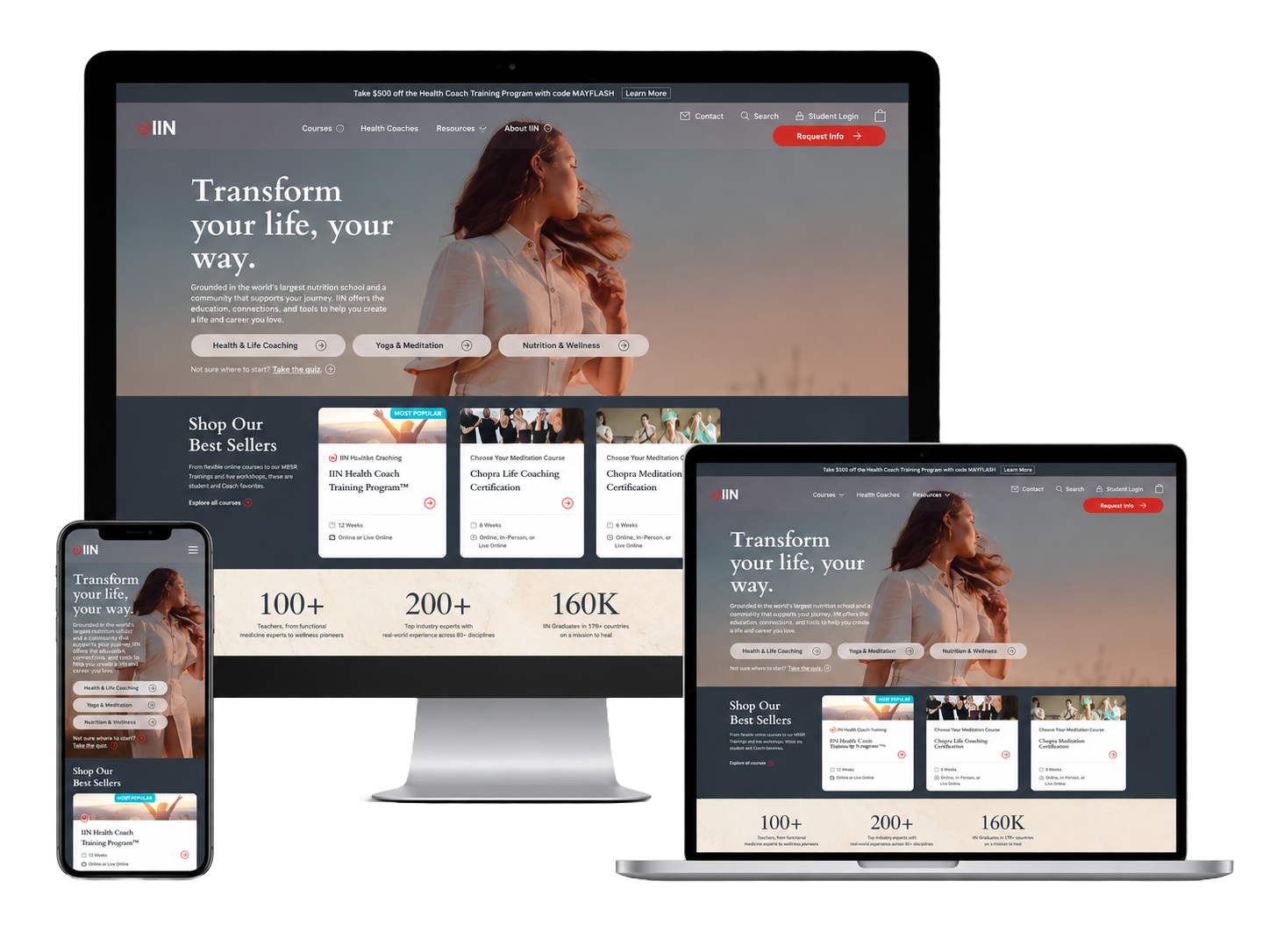
IIN contribution overview ↗ — Professional engineering contributions to enrollment workflows; not presented as a verified KDH agency engagement.
How pricing is scoped
Published Web packages provide a starting point for websites. Application pricing depends on roles, workflows, data, integrations, and testing requirements. Confirm what is included in a written proposal.
| Package | Project setup total | Monthly support |
|---|---|---|
| Starter | $2,500 | $150/month |
| Growth | $3,800 | $250/month |
| Scale | $5,500 | $500/month |
The existing six-month payment option spreads the setup total across six payments. The project total above is authoritative; rounded estimates may need a final-payment adjustment. Monthly support is a separate recurring cost. We confirm the payment schedule, scope, third-party costs, and ongoing support in your proposal. Custom applications and integrations require a scope-specific quote.
Questions before you start
Can you build a business application instead of a marketing site?
Yes. We first define users, permissions, data, workflows, and integrations, then quote the application scope separately from a website package.
Can we keep our existing CMS?
We review its access, templates, data, and integration limits before recommending an extension or migration.
How long will development take?
The schedule depends on the approved scope, content readiness, integrations, and review cycles. Milestones are agreed after discovery.
Will the site generate leads automatically?
We can implement clear inquiry paths and measurement. Traffic, visitor fit, and commercial results require ongoing review; no lead volume is guaranteed.
Do you work outside Long Island?
KDH is based in Freeport, serves Long Island and NYC, and can deliver projects remotely.
Who owns the code and accounts?
The proposal defines code ownership, repository access and handoff. Third-party software keeps its own license terms; agree on hosting, CMS and integration account ownership before work starts.
Custom development / Next step